Description
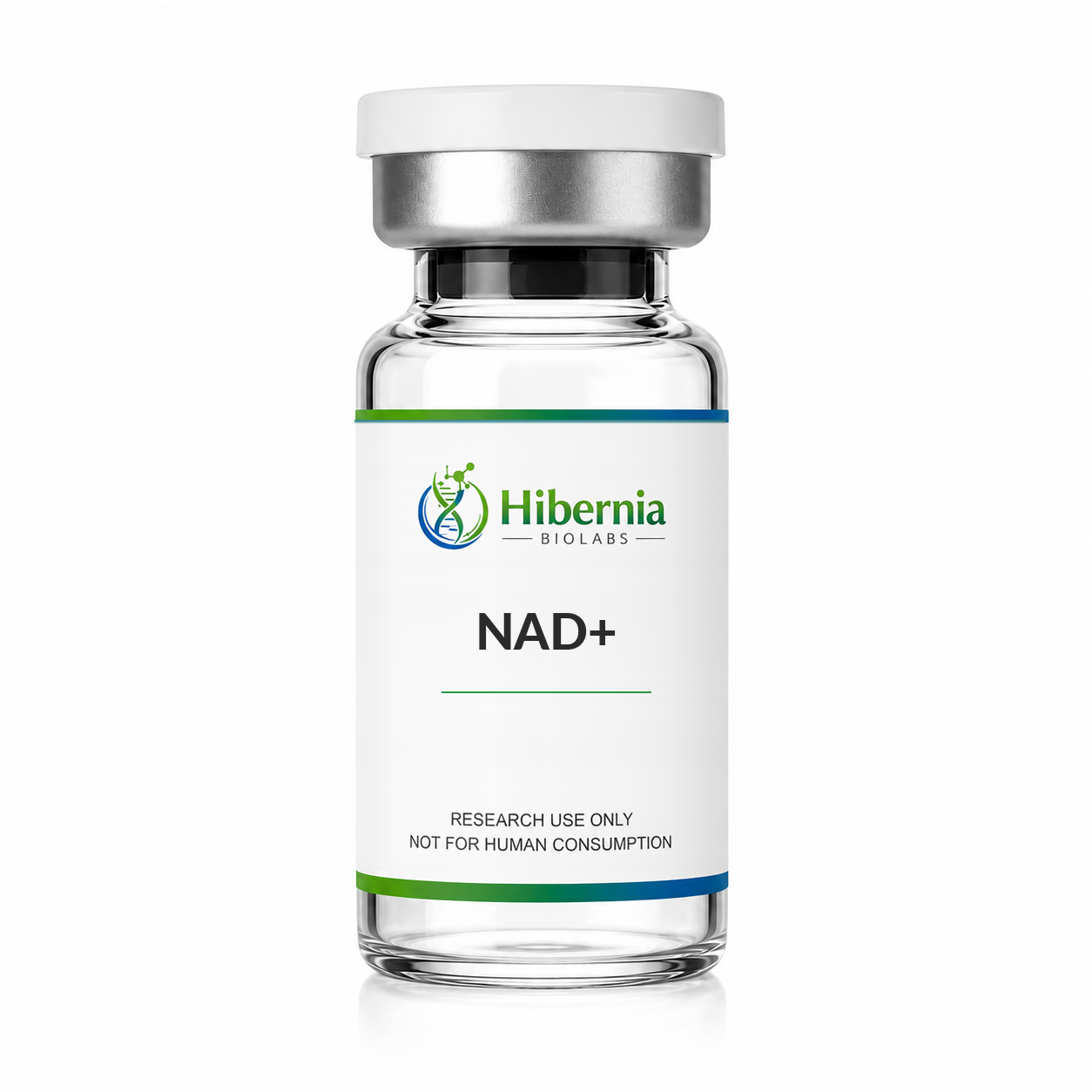
NAD+ – research-grade biochemical coenzyme
Nicotinamide adenine dinucleotide, commonly abbreviated as NAD+, is an oxidised nicotinamide coenzyme present in living cells. It functions together with its reduced form, NADH, as an electron carrier in redox reactions involved in glycolysis, mitochondrial respiration and cellular energy metabolism. NAD+ is a biochemical cofactor rather than a peptide.
Within laboratory and preclinical research contexts, NAD+ is of interest because it also acts as a substrate for NAD+-dependent enzymes, including sirtuins, poly(ADP-ribose) polymerases and CD38. This makes it relevant for studies examining metabolic regulation, mitochondrial activity, DNA-damage responses, chromatin regulation and cellular stress signalling.
Research relevance of NAD+
NAD+ is commonly associated with:
- Investigation of cellular redox reactions and energy metabolism
- Studies involving mitochondrial respiration and ATP-producing pathways
- Experimental analysis of sirtuin and PARP enzyme activity
- Research into DNA-damage responses and cellular repair mechanisms
- Investigation of metabolic stress, cellular ageing and NAD+ homeostasis
Scientific research background
Scientific research examining NAD+ has investigated its dual role as an electron-carrying coenzyme and as a consumed substrate for signalling enzymes. NAD+-dependent processes are involved in metabolic regulation, mitochondrial function, protein modification, DNA repair and cellular responses to stress.
Human studies have primarily examined NAD+ precursors such as nicotinamide riboside and nicotinamide mononucleotide rather than direct administration of NAD+ itself. These studies have demonstrated that some precursors can increase blood or cellular NAD+-related metabolites; however, effects on functional, metabolic and health-related outcomes have been variable and frequently endpoint-specific. A recent review found no eligible outcome trials evaluating intravenous or intramuscular NAD+ itself for anti-ageing or wellness purposes.
Results depend on the chemical form, concentration, experimental model, research conditions, methodology and measured endpoints. Findings involving endogenous NAD+ or orally administered NAD+ precursors should not be interpreted as establishing the safety, effectiveness or suitability of independently supplied NAD+ research material.
The designation “NAD+” does not by itself establish the exact chemical form of the material. Products may differ in oxidation state, stereochemical form, salt form, purity and water content. These characteristics should be confirmed through the product specification and certificate of analysis.
Scientific reference
Covarrubias AJ et al. NAD+ metabolism and its roles in cellular processes during ageing. Nature Reviews Molecular Cell Biology, 2021.
FOR RESEARCH USE ONLY
IMPORTANT INFORMATION
- This substance is supplied strictly for laboratory research purposes.
- It is not a peptide.
- It is not a food product.
- It is not a dietary supplement.
- It is not an authorised medicinal product.
- It is not intended for human or animal consumption.
- It is not intended for injection, infusion, oral administration or topical application.
- The product name does not by itself confirm its chemical form, concentration, purity, sterility or endotoxin status.
- Keep out of reach of children.
- Keep the container sealed when not in use.
- Store in the original container only.
- Store according to the conditions stated on the product label or certificate of analysis.
- Protect from moisture, excessive heat and direct sunlight.
- Avoid handling during pregnancy or breastfeeding.
In the event of accidental exposure, irritation, illness or any adverse reaction, seek medical advice.


Reviews
There are no reviews yet.