
Description
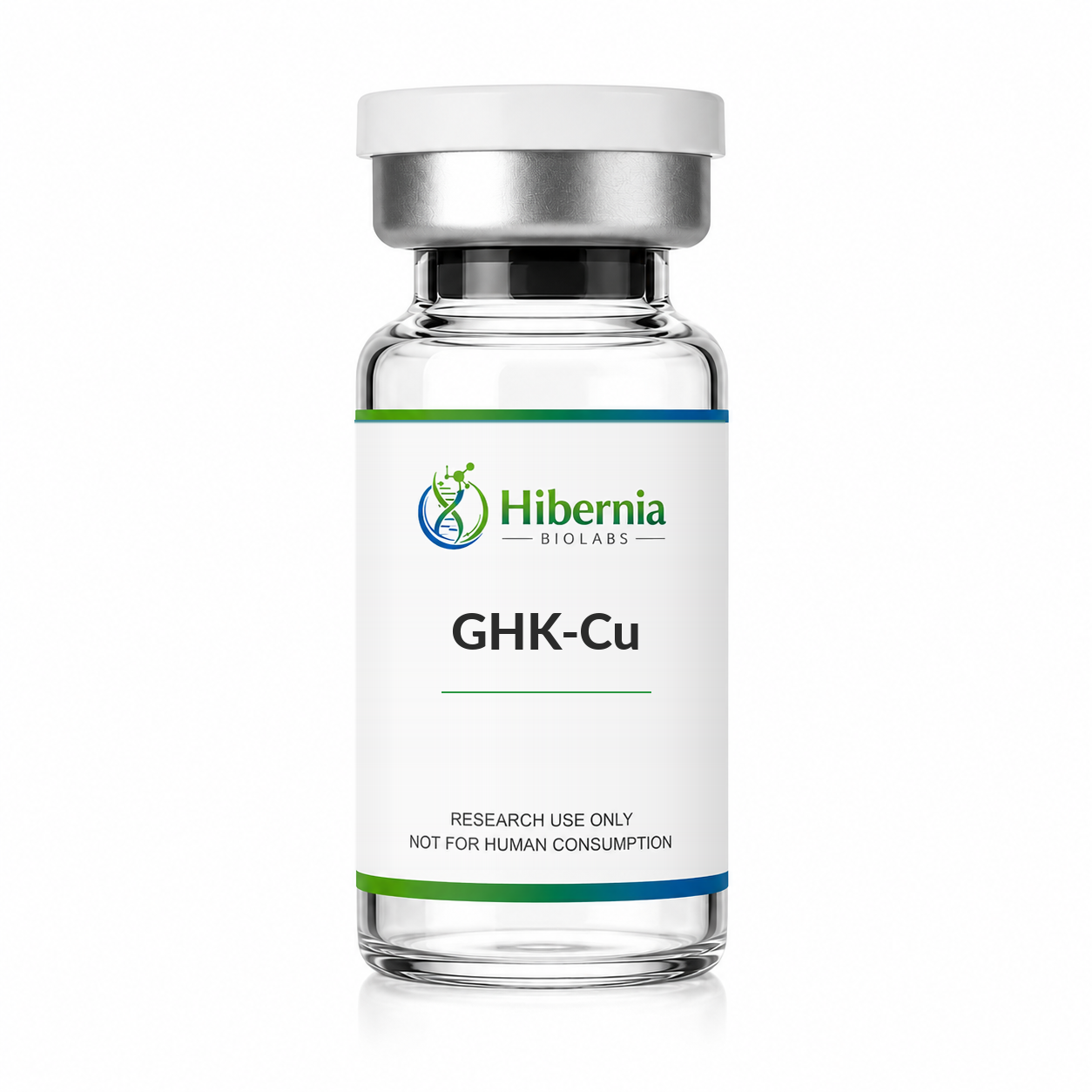
GHK-Cu – research-grade copper peptide
GHK-Cu is a copper-binding tripeptide complex formed from glycyl-L-histidyl-L-lysine, commonly abbreviated as GHK, and copper ions. Because of this metal-binding activity, GHK-Cu is widely discussed in scientific research involving copper transport, cellular signalling and extracellular-matrix regulation.
Within laboratory and preclinical research contexts, GHK-Cu is of interest due to its interactions with fibroblasts and components involved in tissue remodelling. This makes it relevant for studies examining collagen production, glycosaminoglycan synthesis, cellular responses to injury and other biological repair mechanisms.
Research relevance of GHK-Cu
GHK-Cu is commonly associated with:
- Copper-binding and copper-transport research
- Investigation of fibroblast signalling and activity
- Studies involving collagen and extracellular-matrix regulation
- Experimental analysis of glycosaminoglycan and proteoglycan synthesis
- Research into tissue-remodelling and biological repair pathways
Scientific research background
Scientific studies examining GHK-Cu have investigated its effects on collagen synthesis, extracellular-matrix components, fibroblast activity and wound-repair models. Laboratory studies have reported measurable biological responses in cultured cells and animal models, although findings vary according to the concentration, formulation, experimental model and measured endpoints.
Results from these studies should not be interpreted as confirmed therapeutic outcomes in humans. Research findings concerning prepared formulations or controlled experimental materials do not establish the identity, purity, safety, effectiveness or suitability of independently supplied research-grade GHK-Cu.
Scientific reference
Maquart F-X et al. Stimulation of collagen synthesis in fibroblast cultures by the tripeptide-copper complex glycyl-L-histidyl-L-lysine-Cu²⁺. FEBS Letters, 1988.
FOR RESEARCH USE ONLY
IMPORTANT INFORMATION
- This substance is supplied strictly for laboratory research purposes.
- It is not a food product.
- It is not a dietary supplement.
- It is not an authorised medicinal product.
- It is not intended for human or animal consumption.
- The stated 50 mg quantity describes the nominal material content and is not a recommended dose.
- Keep out of reach of children.
- Keep the container sealed when not in use.
- Store in the original container only.
- Store according to the conditions stated on the product label or certificate of analysis.
- Protect from moisture, excessive heat and direct sunlight.
- Avoid handling during pregnancy or breastfeeding.
In the event of accidental exposure, irritation, illness or any adverse reaction, seek medical advice.


Reviews
There are no reviews yet.